ABOUT NOVEL-LIKE TRAITS IN HISTORY AND ABOUT KNOWLEDGE IN NOVELS
The topic of the history/story-based novel gives us the freedom to look at the concept from two perspectives: one being epistemological and the other artistic. The actual term istoriya (translated as ‘history’ and ‘story’) belongs both to science and to literature and in one case it can mean actual events, while in another it can be merely a narrative. Therefore, it would be intriguing to see not only whether a novel can serve as a ‘source’ and bring knowledge of the past (potential that has always attracted writers), but also if history can be read as a novel (a hazard that has usually repelled historians). Does erudition stay away from a fascinating story and what else can a novel teach a historian? These questions serve as a starting point in this article.
ABOUT NOVEL-LIKE TRAITS IN HISTORY AND ABOUT KNOWLEDGE IN NOVELS
-
-
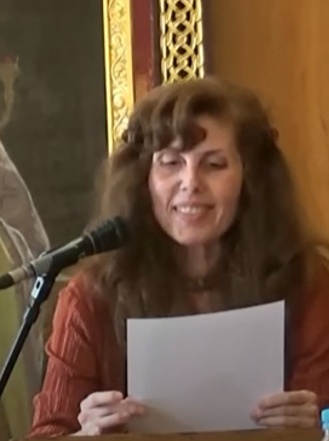
Margarita Serafimova
- [email protected]
- Institute for Literature – Bulgarian Academy of Sciences
- Bulgaria
Маргарита Серафимова (Институт за литература, БАН) е завършила българска филология в СУ „Св. Климент Охридски” (1989), специализирала е в Université de Genève, Швейцария (1998–1999, 2002–2003) и е преподавала в Université Clermont Auvergne, Франция (2006–2012). Автор е на монографиите „Писмото и романът” (2001), „Пространството в литературата” (2018) и „Орхан Памук и "Името ми е Червен". От османската миниатюра до постмодерния роман” (2020), на учебното помагало „Ренесанс: литературни анализи за 10. клас” (2002), както и на редица литературоведски и културологични изследвания. Доктор (Теория на литературата) от 2000 г. и доктор на науките (Теория и история на културата) от 2016 г. Водила е лекционни курсове към Катедра по теория на литературата в СУ „Св. Климент Охридски” (1995–2005, 2013–1016). Член е на Академичния кръг по сравнително литературознание, Българското общество за проучване на XVIII век, Centre de recherches sur les litteratures et la sociopoetique (CELIS).
-
-
 Abstract:
The topic of the history/story-based novel gives us the freedom to look at the concept from two perspectives: one being epistemological and the other artistic. The actual term istoriya (translated as ‘history’ and ‘story’) belongs both to science and to literature and in one case it can mean actual events, while in another it can be merely a narrative. Therefore, it would be intriguing to see not only whether a novel can serve as a ‘source’ and bring knowledge of the past (potential that has always attracted writers), but also if history can be read as a novel (a hazard that has usually repelled historians). Does erudition stay away from a fascinating story and what else can a novel teach a historian? These questions serve as a starting point in this article.
Keywords: history Novel science narrative literature as а “source”